Stock Name:PROYA

Stock Code:603605

Language
Search for more information about Proya
Select language version

Common Ingredients

  • Peptides

    Peptides are short chains of amino acids that constitute long-chain proteins. Currently, there is no specific definition for peptide nomenclature. According to the PCPC's definition, peptides containing 2–10 amino acids are referred to as "small-molecule synthetic peptides," those containing 11–100 amino acids as "oligopeptides," and those containing more than 100 amino acids as "polypeptides." In the 16th edition of the INCI Dictionary, synthetic peptides consisting of more than 100 amino acids are designated as "polypeptide"; however, the term "peptide," as commonly used, typically refers to small-molecule synthetic peptides.

    Generally, dipeptides, tripeptides, and pentapeptides help stimulate collagen production, while hexapeptides can inhibit the release of neurotransmitters, offering effects similar to botulinum toxin [1].

    Sources

    Currently, peptides are primarily obtained through chemical synthesis, although novel sources based on biological fermentation technology have gradually emerged in recent years.

    Classified by efficacy:

    Anti-Wrinkle and Firming Peptides: Palmitoyl Tripeptide-5, Palmitoyl Pentapeptide-4, Copper Tripeptide-1, Pentapeptide-3, Acetyl Hexapeptide-8, Palmitoyl Tripeptide-1, etc.

    Soothing Peptides: Palmitoyl Tripeptide-8, etc.

    Skin-Brightening Peptides: Nonapeptide-1, etc.

    Classified by mechanism of action:

    Signal Peptides [2]: These stimulate the production of extracellular matrix proteins, including collagen and elastin, and reduce collagenase activity, thereby improving signs of skin aging.

    Carrier Peptides [2]: These stabilize and deliver metals, such as copper peptides; once copper enters the skin, it promotes collagen production and exerts anti-aging effects.

    Neurotransmitter-Inhibiting Peptides [2]: Acting as neurotransmitter release blockers within synaptic vesicles, they reduce involuntary muscle movements to minimize dynamic facial lines and wrinkles; a common example is Argireline (Acetyl Hexapeptide-8).


    References

    [1]杜登学, 王姗姗, 周磊. 肽类在化妆品中的应用[J]. 齐鲁工业大学学报(自然科学版), 2012, 26(001):35-39.  
    [2]德拉洛斯,等. 功能性化妆品:美容皮肤科实用技术[M]. 人民军医出版社, 2007.

  • Collagen

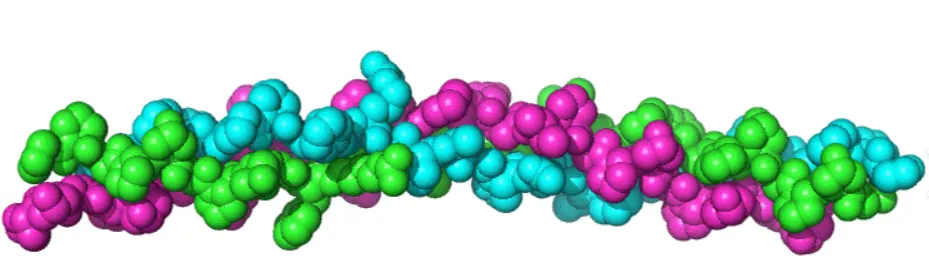
    Collagen is a fundamental functional protein in the skin and a primary component of the extracellular matrix. It works synergistically with other ECM proteins, such as elastin and fibronectin, to maintain skin firmness, elasticity, and plumpness. It is closely linked to skin youthfulness, wound healing, and cellular support and regeneration. To date, 28 different types of collagen have been identified [1].

    Sources

    While collagen was previously primarily sourced from animal tissues, recombinant collagen developed through biofermentation technology has increasingly become the preferred choice in recent years.

    Efficacy

    The main types of collagen in the skin are Type I, Type III, and Type V, followed by Type XII, Type XIV, Type XVI, and Type VI. Among these, Type I collagen is the most abundant and provides structural support; Type III collagen is highly concentrated in newborn skin; Type IV collagen is a key component of the basement membrane's reticular structure; Type VII collagen functions as an anchor, enhancing the connection between the epidermis and dermis; and Type XVII collagen is a transmembrane collagen with potential applications in addressing skin aging and promoting hair regrowth [1]. Currently, the primary collagen types used in skincare are Types I, III, and XVII. In the future, the application of more subtypes is expected to further expand the potential of collagen in skin health.

    Purpose

    They are suitable for products designed to smooth facial and neck wrinkles, V-shaping cosmetics, body firming lotions, and stretch mark treatments.


    References

    [1]谭凤怡,谢嘉敏,潘振锋,张新旭,郑泽态,曾祉莹,周艳芳 . 胶原蛋白联合微针治疗皮肤光老化的作用及机制 [J]. 中国组织工程研究,2026,30(2):451-458.

Product ingredient disclosure
The time of product ingredient disclosure lags behind the requirement. If an inconsistency exists, please refer to the registration information at the National Medical Products Administration. Here's the links to see the detailed product registration information:
China Specialty Cosmetics Registration Information
China General Cosmetics Recordation Information