Stock Name:PROYA

Stock Code:603605

Language
Search for more information about Proya
Select language version

Common Ingredients

  • Niacinamide

    Niacinamide, also known as nicotinamide, is the amide compound of nicotinic acid (Vitamin B3).
    Niacinamide is a relatively stable vitamin and an essential component in the body's ATP production.


    Source

    Niacinamide is currently produced primarily via enzymatic synthesis.

    Purpose

    Niacinamide is a common skin-brightening ingredient used in cosmetics. It can improve dull, sallow skin, reduce pigmentation, and brighten the complexion.

    Efficacy

    Niacinamide primarily works on the skin by inhibiting melanin transport, brightening the skin, and improving the complexion; it also helps repair the skin defense, increase epidermal thickness, and regulate sebum secretion [1].

    In vitro and human models [2-3], niacinamide has been found to reduce melanosome transfer, decrease skin pigmentation, improve melasma, and alleviate inflammation; another human study [4] showed that niacinamide can thicken the stratum corneum and reduce water loss.

    Applications

    Niacinamide is commonly used in skin-brightening products.

    References
    [1] Diana D Z , Akira M , Kenneth S . The effect of 2% niacinamide on facial sebum production[J]. Journal of cosmetic and laser therapy : official publication of the European Society for Laser Dermatology, 2013, 2006年8卷2期:96-101页.  
    [2]Hakozaki T, Minwalla L, Zhuang J, et al. The effect of niacinamide on reducing cutaneous pigmentation and suppression of melanosome transfer[J]. British Journal of Dermatology, 2002, 147(1): 20-31.  
    [3] Navarrete-Solís J, Castanedo-Cázares J P, Torres-Álvarez B, et al. A double-blind, randomized clinical trial of niacinamide 4% versus hydroquinone 4% in the treatment of melasma[J]. Dermatology research and practice, 2011, 2011.  
    [4] Mohammed D, Crowther J M, Matts P J, et al. Influence of niacinamide containing formulations on the molecular and biophysical properties of the stratum corneum[J]. International journal of pharmaceutics, 2013, 441(1-2): 192-201.


  • Ascorbic acid (VC)

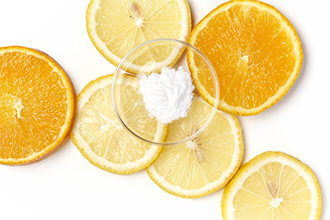
    Ascorbic acid, also known as Vitamin C, is a water-soluble vitamin. Ascorbic acid exists in various isomers; its naturally active form is L-ascorbic acid, and its aqueous solution is acidic.
    Source

    Vitamin C is widely found in fresh fruits and vegetables. Currently, the main methods for obtaining ascorbic acid include natural extraction, chemical synthesis, and fermentation.

    Purposes

    It is an ingredient commonly used in cosmetics for skin brightening, antioxidant effects, and promoting collagen synthesis.

    Efficacy

    Common application and benefits of ascorbic acid (Vitamin C) in cosmetics [1]:

    • Antioxidant Action

    Vitamin C is commonly used as an antioxidant in skincare products. It scavenges free radicals and reduces their activity, thereby minimizing oxidative damage to key cellular components.

    • Skin Brightening

    Vitamin C has been demonstrated to function as a skin-brightening agent in skincare products. It inhibits melanin production by reducing quinones (such as dopaquinone), thereby preventing the formation of tyrosinase-dependent melanin.

    • Promoting Collagen Production

    Vitamin C can also be used as an anti-wrinkle agent. It stimulates collagen production in the dermis and promotes fibroblast proliferation, leading to increased collagen synthesis.

    Applications

    It is primarily used in skincare products for brightening and evening skin tone. Due to its antioxidant properties and ability to inhibit melanin production, it is also used in anti-photoaging skincare products to help improve wrinkles and fine lines caused by photoaging.

    References

    [1]Nicholas P J Stamford, Stability, transdermal penetration, and cutaneous effects of ascorbic acid and its derivatives[J]. Journal of Cosmetic Dermatology, 2012, 11(4):310-317.

Product ingredient disclosure
The time of product ingredient disclosure lags behind the requirement. If an inconsistency exists, please refer to the registration information at the National Medical Products Administration. Here's the links to see the detailed product registration information:
China Specialty Cosmetics Registration Information
China General Cosmetics Recordation Information